(Search Engine Optimimization) SEO is the process of improving a website’s visibility on search engines like Google. It involves optimizing your website’s content, structure, keywords, and technical performance to increase organic traffic. Effective SEO helps improve search rankings, attract the right audience, generate qualified leads, and support long-term business growth.
Creating high-quality, relevant content optimizing elements on your webpage, such as title tags, meta descriptions, headings, and keywords.
Building your website's authority and reputation across the internet, primarily by earning backlinks (links pointing to your site from other reputable websites)
Ranking higher on search engine results pages is highly valuable because the vast majority of users rarely scroll past the first page. Effective SEO brings targeted, active users to your site ,increasing brand awareness , leads, and conversions over time without relying on paid advertising
Social Media Marketing (SMM) is the process of promoting your business through platforms like Facebook, Instagram, LinkedIn, X, and TikTok to build brand awareness, engage with your audience, and drive more leads and sales. A strategic social media presence helps businesses connect with potential customers, increase website traffic, improve customer trust, and grow their online community.
Third-party web tools utilized by creators to quickly buy bulk social media metrics like likes, followers or views
content strategy, paid advertising, community engagement , analytics
Oversees and optimizes an organization's online presence across platforms like Instagram , LinkedIn ...they build brand awareness, drive engagement, and generate leads by designing campaigns, creating content calendars, and analyzing performance data.

Search Engine Marketing (SEM) is a paid digital marketing strategy that helps businesses appear at the top of search engine results through targeted advertising. By using platforms like Google Ads, SEM connects your business with people who are actively searching for your products or services. This approach delivers immediate visibility, attracts qualified visitors, and increases the chances of generating leads, sales, and business growth.
Understanding the difference between paid (SEM) and organic (SEO) strategy helps businesses balance their budget and timeline
SEM is highly effective because it targets consumers at the exact moment they are looking for your products or services. Because these users exhibit strong commercial intent, SEM often yields high conversion rates compared to interruptive advertising like social media.
Placing sponsored text, image, or shopping ads at the very top or bottom of search results.
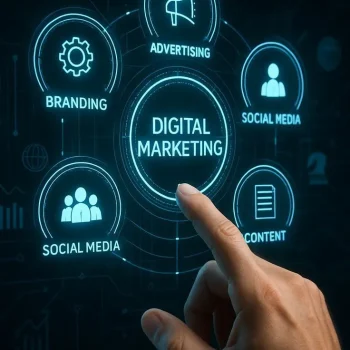
Digital marketing helps businesses reach the right audience, increase brand awareness, generate quality leads, and drive more sales. It offers cost-effective marketing solutions with measurable results, allowing businesses to improve their online visibility, build customer trust, and achieve long-term growth through data-driven strategies.
Digital marketing allows businesses to reach customers across the world through online platforms.
It is more affordable than traditional marketing methods such as TV, radio, and print advertising.
Helps businesses build a strong online presence and improve brand recoganition.
Content marketing helps businesses attract, engage, and retain their target audience by delivering valuable and relevant content. Effective content marketing includes blog articles, website content, social media posts, email newsletters, videos, infographics, and other forms of digital content tailored to your audience’s interests. High-quality, SEO-optimized content also helps improve search engine rankings, increase organic website traffic, and establish your business as a trusted authority in your industry.
Written Content, Visual Content, Audio/Visual Content, Interactive Content
Digital Marketing , Content Marketing, Social Media Marketing, and Traditional Marketing
Having a robust SEO strategy is an integral part of your overall marketing strategy and, when executed well, leads to better search engine results pages rankings, increased traffic, and more potential for online sales.
Web designing is the process of creating responsive, user-friendly, and visually engaging websites that reflect your brand and deliver a seamless experience across all devices. A professionally designed website improves user experience, builds trust, strengthens your online presence, and helps convert visitors into customers.A professionally designed website can improve brand credibility, increase customer engagement, and support business growth.
Web design is primarily divided into two key areas: Users Experience (UX) and User Interface (UI)
this determines how the website feels and functions. A UX designer focuses on making the site easy to navigate, ensuring users can achieve their goals without frustration.
This determines how the website looks. A UI designer works on the visual elements, such as choosing typography, color palettes, spacing, and designing interactive elements like buttons and forms.